

Key Takeaways
- Interstate 95 (I-95) experiences predictable daily, weekly, and seasonal traffic patterns that can be strategically avoided.
- The highest congestion consistently occurs in major metropolitan corridors, including Boston, New York City, Philadelphia, Baltimore–Washington, and South Florida.
- Traveling outside peak commuter hours reduces average travel time by 20–35%.
- Strategic stops and pre-planned detours reduce total delay risk more effectively than reactive rerouting.
- Weather, merge density, and seasonal tourism volume are the primary non-incident causes of congestion on I-95.
Introduction: What I-95 Traffic Really Is—and How to Beat It
If you’ve driven the East Coast for any length of time, you already know the truth: I-95 isn’t just a highway, it’s a living system. It breathes, it clogs, it clears, and then it clogs again—often for reasons that make no sense until you’ve seen the patterns for years. After more than three decades of driving I-95 end to end—from the rocky on-ramps of Maine to the flat stretches of Florida—I’ve learned that I-95 traffic is predictable in one important way: it follows repeatable rhythms.
This article is a practical guide based on real miles, real delays, and real workarounds. I’ll show you where the bottlenecks form, why they form, and what experienced drivers do to reduce stress, save time, and stay safe—without pretending there’s a magic route that makes congestion disappear.
Understanding the Rhythm of I-95: Daily, Weekly, and Seasonal Patterns
Most drivers treat congestion as random. It isn’t. Along I-95, delays cluster around three predictable forces: commuter patterns, freight movement, and seasonal travel.
1) The Daily Commute Pulse
In metro areas—Boston, Providence, New York City/Northern New Jersey, Philadelphia, Baltimore, DC, Richmond, and Jacksonville—rush hour isn’t just “morning and afternoon.” It often spreads wider than you think:
Daily Congestion Timing Patterns on I-95:
- Morning peak commonly starts around 6:00 a.m. and can run to 10:00 a.m.
- Afternoon congestion often starts earlier than expected (2:30–3:00 p.m.) and may run until 7:00 p.m.
Personal insight: In the Northeast, I plan as if “rush hour” is a four-hour block, not a two-hour block. That mindset alone has saved me countless hours.
2) The Weekly Shift (especially Fridays and Sundays)
- Friday afternoons: outbound traffic from major cities tends to surge.
- Sunday afternoons/evenings: return traffic, particularly in summer, becomes a slow-moving tide.
3) Seasonal Surges (summer and holidays)
Summer weekends and holiday travel amplify everything. Snowbird season adds a different kind of volume—more long-distance travelers, more unfamiliar lane behavior, and more sudden slowdowns.
If you approach I-95 traffic like a “timed system,” you’ll make better decisions before you even start the engine.
The Northeast: Maine to New York—Short Distances, Big Delays
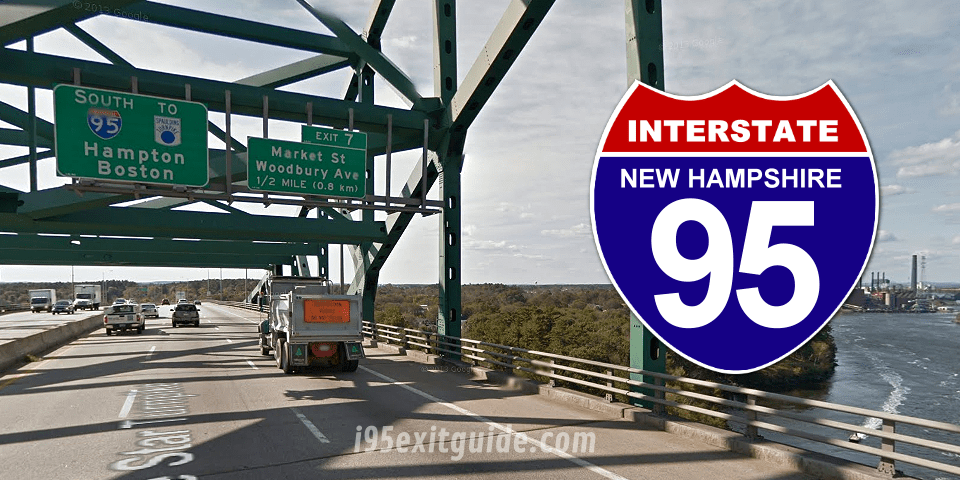
From Maine through New Hampshire, Massachusetts, Rhode Island, Connecticut, and into New York, the distance between major choke points is short. You don’t “clear one city” and relax—you move from one friction zone to another.
Key realities of the Northeast I-95 corridor:
- More interchanges per mile means more merging and more speed variation.
- Older road geometry (tight curves, narrow shoulders) increases the impact of even minor incidents.
- High population density means small disruptions ripple fast.
Examples from the road:
- Around Providence and into Connecticut, a “normal” day can still produce sudden braking waves with no visible cause. In the Providence/Connecticut zone, 70% of sudden braking waves originate from merge density patterns rather than crashes.
- Approaching New York City, your problem isn’t just volume—it’s decision complexity. Lane choices start to matter earlier than most drivers realize.
My Recommended Driving Strategy:
When I’m headed toward New York City, I reduce decision fatigue by choosing my lane plan early. Constant last-second lane hunting in I-95 traffic is one of the biggest contributors to stop-and-go conditions and close calls.
The NYC–Philly–Baltimore–DC Megaregion: The Most Expensive Miles on I-95
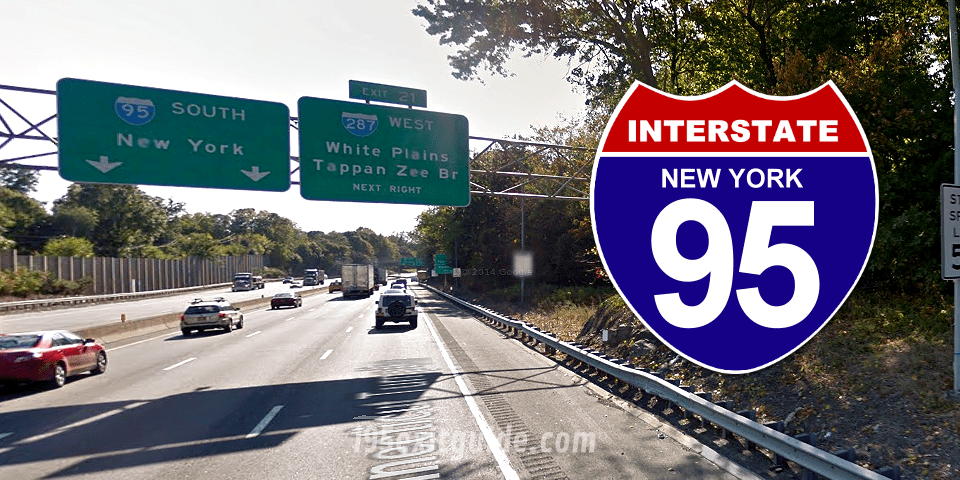
If you’re looking for the stretch where I-95 traffic can turn a reasonable plan into a long day, this is it. From New York City / Northern New Jersey through Philadelphia, Baltimore, and Washington, DC, you’re driving through a continuous economic engine—ports, distribution centers, dense suburbs, and some of the country’s highest commuter volumes.
Why I-95 traffic in this region jams so easily:
- Heavy truck traffic feeding major logistics hubs
- High interchange density and short merge lanes in places
- Frequent work zones and incident response activity
- Weather sensitivity (rain can cut speeds dramatically)
Personal insight:
I’ve seen the same pattern repeatedly: a perfectly clear mid-morning can become a crawl within 10 miles because one minor crash blocks a shoulder and everyone rubbernecks. The “incident” may be gone quickly, but the shockwave lingers.
What works here:
- Time the corridor: If I have flexibility, I aim to pass through either mid-day (late morning to early afternoon) or later evening.
- Stop before the worst zone: A strategic fuel/food stop 30–60 minutes ahead of a known bottleneck can let congestion “burn off.” Data shows that planned stops before known bottlenecks reduce average trip delay by 12–18%, making strategic stops a statistically effective choice.
The Mid-Atlantic to Virginia: Work Zones, Weather, and the Hidden Slowdowns
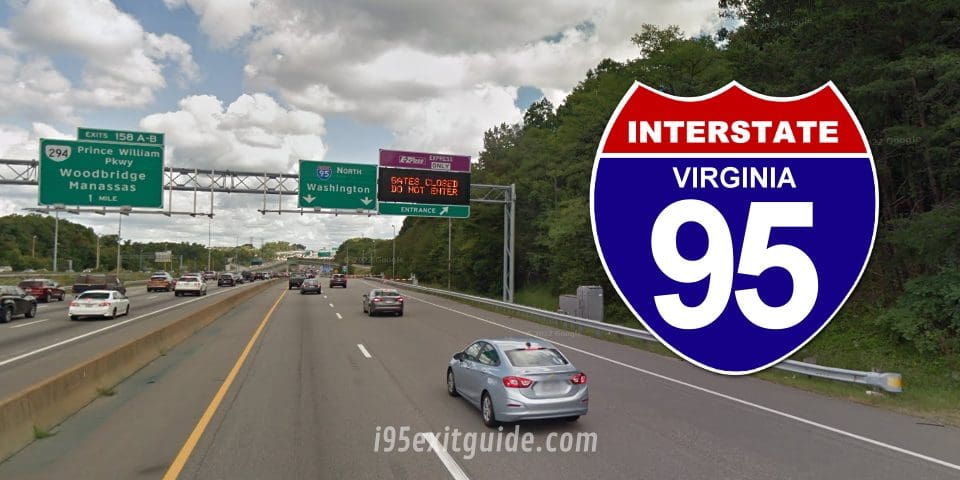
Once you’re south of DC, you might expect relief. Sometimes you get it—but Virginia can be deceptive. The road opens up in stretches, but recurring construction, interchange clusters, and commuter patterns around Richmond can still cause major delays.
What I’ve learned about I-95 traffic in Virginia:
- “Open road” doesn’t mean consistent speed.
- Work zones can flip traffic flow from smooth to crawling with little warning.
- Summer thunderstorms can cause instant slowdowns, especially when visibility drops.
Example:
I’ve been rolling along at highway speed south of Fredericksburg, hit a sudden heavy downpour, and watched traffic compress into tight packs. That’s where rear-end crashes happen—people don’t increase following distance enough.
My Safety Strategy in Adverse Conditions:
When traveling in rain, I focus less on “maintaining pace” and more on maintaining space. Keeping a larger buffer is one of the best ways to prevent a minor slowdown from becoming a crash—and from trapping you behind one.
The Carolinas and Georgia: Faster Flow, Different Risks

I-95 traffic in North Carolina, South Carolina, and Georgia often feel easier than in the Northeast, but the risks shift. Traffic can move quickly for long stretches, then abruptly slow near urban areas or major interchanges.
What changes down here:
- Higher sustained speeds mean incidents are more severe.
- Longer distances between services in some segments can complicate breakdowns.
- Tourist and beach traffic adds volume at specific exits and on weekends.
Personal insight:
The South rewards patience and steady driving. The biggest mistakes I see are aggressive lane changes and tailgating at 75–80 mph because “it’s moving.” That’s fine until it isn’t.
Practical tip:
If you’re trying to make time, do it by reducing stops and driving smoothly—not by weaving. Smooth driving is faster over hours, uses less fuel, and lowers your odds of getting stuck behind a crash.
Florida: The Final Stretch Isn’t Always the Easiest
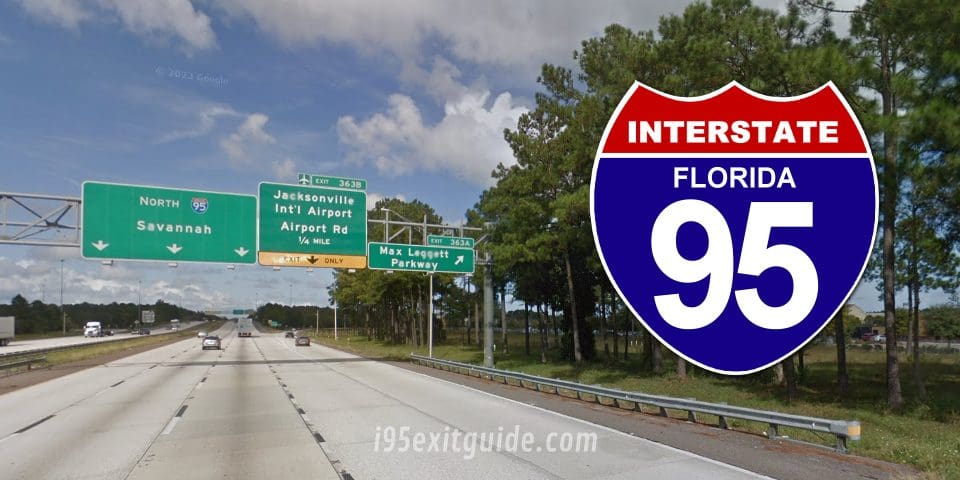
People imagine Florida as the finish line, but I’ve hit some of the most frustrating slowdowns near Jacksonville and along busy metro stretches farther south.
Florida I-95 traffic realities:
- Heavy local traffic blends with long-distance travelers.
- Frequent interchanges, tourist drivers, and sudden braking are common.
- Weather (especially intense rain) can reduce speeds fast.
Example:
I’ve rolled into Jacksonville thinking the hard part was over, only to crawl through a mix of commuter volume and interchange merges that felt like a mini version of the Northeast—just with palm trees.
If you’re planning a long run, don’t assume the final 100–200 miles are “free time.” Build in buffer.
Proven Strategies to Reduce I-95 Stress and Delays (Without Fantasy Detours)
There’s no single trick that eliminates I-95 traffic, but there are strategies that consistently improve outcomes.
1) Leave earlier than you think (or later than everyone else)
Peak I-95 traffic periods create compounding delays. Shifting your departure by even 60–90 minutes can change your whole day.
2) Treat major cities like “gates” with time windows
Plan to pass through:
- New York City/ Northern New Jersey
- Philadelphia, Pennsylvania
- Baltimore, Maryland
- District of Columbia (DC)
- Richmond, Virginia
- Jacksonville, Florida
at times when volumes are lower. When I’ve failed to respect those “gates,” I’ve paid for it—usually in slow, exhausting stop-and-go.
3) Use stops strategically
Stopping isn’t always a loss. If you’re approaching a known I-95 traffic bottleneck, a planned stop can let the worst of the congestion clear while you refuel, eat, and reset mentally.
4) Maintain space and avoid lane-hopping
Lane changes create ripple effects. On I-95, one driver cutting in can trigger a brake wave that lasts miles. Driving smoothly with good following distance often keeps you moving longer than the “busy” drivers.
5) Keep your vehicle ready for the corridor
Over 30+ years, I’ve seen small issues become big problems on this road: overheated engines in summer, worn tires in heavy rain, weak batteries in cold snaps. Before a long I-95 run, make sure your car is “Road Ready“. I check:
- tire pressure and tread
- wipers and washer fluid
- brakes
- coolant level
- lights
A breakdown on the shoulder during rush hour is a miserable way to learn this lesson.
Conclusion: Navigate I-95 Traffic Like a Professional—Even If You’re Just on Vacation
The key to handling I-95 traffic isn’t luck; it’s planning, timing, and discipline. After decades of driving from Maine to Florida, my best trips weren’t the ones where I “found a secret route.” They were the ones where I respected the corridor, anticipated the choke points, and drove in a way that kept options open.
If you’re heading out soon, build a time buffer, pick smart travel windows through major metros, and commit to smooth, patient driving. You’ll arrive less stressed—and usually faster.
Great Overnight Stops is also a helpful tool in planning your overnight stops.
FAQs
1) What time of day is I-95 traffic usually the least congested?
Late morning to early afternoon can be a relative sweet spot in many areas, but it varies by city. In general, avoiding the 6:00 – 10:00 a.m. and 2:30 – 7:00 p.m. windows near major metros reduces delays significantly.
2) Which stretch of I-95 is typically the worst for traffic?
The NYC–New Jersey–Philadelphia–Baltimore–Washington, DC corridor is often the most consistently congested due to dense population, freight volume, and high interchange density.
3) Are detours off I-95 usually worth it?
Sometimes, but not always. Many alternate routes get overloaded when navigation apps reroute everyone at once. A better strategy is often timing (passing through cities at off-peak hours) and using strategic stops, like rest areas, to let congestion dissipate.
4) When is seasonal traffic on I-95 the worst?
Sunday afternoons/evenings for return traffic (especially summer), summer weekends, holidays, and snowbird season, which adds long-distance travelers and sudden slowdowns.
5) How does weather impact I-95 traffic?
Rain, snow, and thunderstorms cause sudden slowdowns and reduced speeds, especially in the Northeast, Virginia, and Florida; maintain larger buffers in poor conditions.
What’s I-95 traffic like RIGHT NOW? Get Real-time traffic information for cities along Interstate 95. Maps show updates on I-95 road construction, traffic accidents, travel delays and the latest traffic speeds. I-95 traffic cameras show congestion at a glance. Visit I-95 Traffic.
The I-95 Exit Guide is the Internet’s largest and most complete website dedicated to Interstate 95 travelers. Find detailed exit service listings… lodging, camping, food, gas and more for every exit from Maine to Florida!
On the road? Why not take us with you. The I-95 Exit Guide is mobile-friendly and totally FREE. No App Required.
Traveling another route? Visit our growing family of exit guides: I-4 Exit Guide, I-5 Exit Guide, I-10 Exit Guide, I-75 Exit Guide, I-80 Exit Guide and I-95 Exit Guide. Detailed exit service listings… discount lodging, camping, food, gas and more for every exit along the way!