
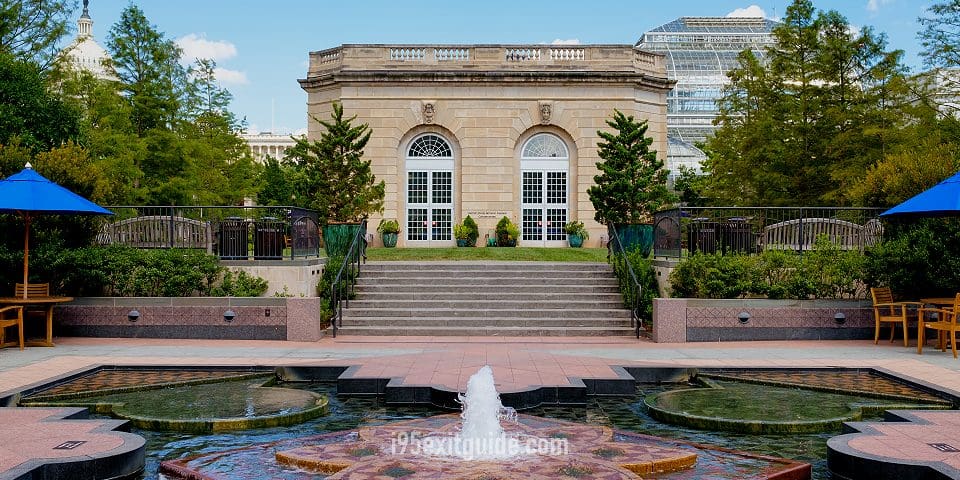
The United States Botanic Garden, tucked at the foot of the U.S. Capitol on the National Mall in Washington, D.C., is a living museum of plants from around the world and an unexpectedly restorative stop for travelers. Established by Congress in 1820, their mission is to promote understanding of and stewardship for plants and the plant kingdom through living collections, research, conservation, and education. For anyone driving along I-95 and considering a detour into the capital, the Botanic Garden offers a compact, rewarding experience that contrasts with the city’s monuments and museums: it is sensory, green, fragrant, free, and centrally located.
What You’ll See and Why it Matters
The Conservatory
The heart of the United States Botanic Garden experience is the Conservatory, a glass-and-stone greenhouse that houses themed rooms representing multiple climates and ecosystems. Walk from the lush humidity of a tropical rainforest room, where towering palms, orchids, and epiphytes create layers of green, into an arid desert chamber dotted with sculptural cacti and succulents. There are temperate displays, a cycad collection that showcases living fossils, and special seasonal installations that interpret horticultural themes or highlight plant conservation stories. Together these rooms let you experience a cross-section of global plant diversity in a single stroll-an especially appealing feature if you’re pressed for time.
The National Garden and Bartholdi Park
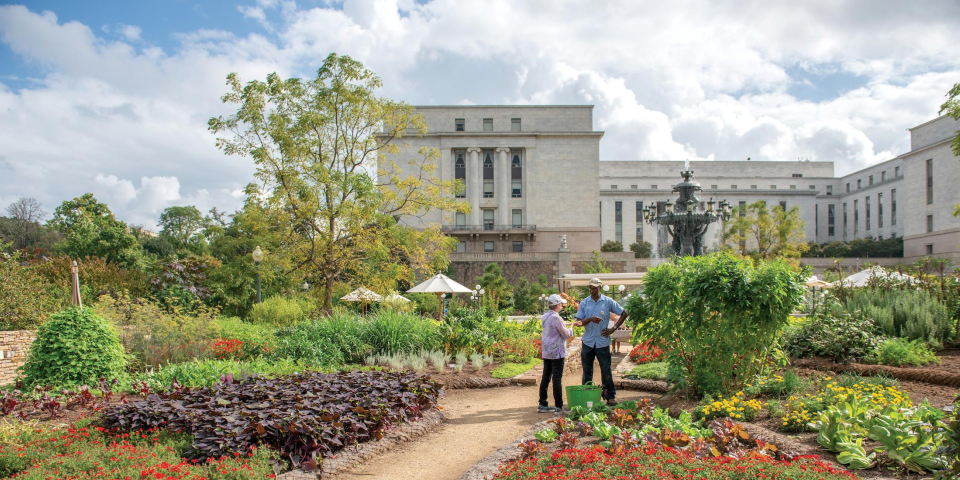
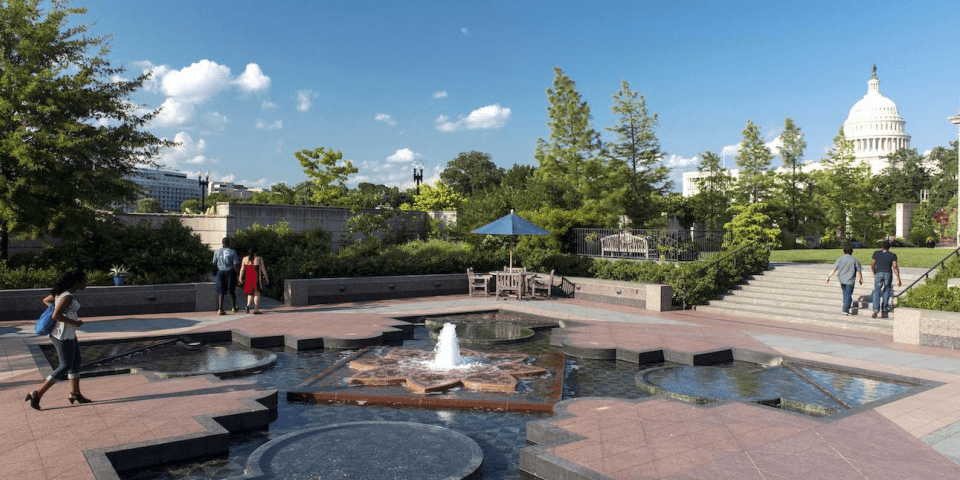
Outside the Conservatory are the outdoor components: the National Garden and Bartholdi Park. The National Garden, designed to demonstrate sustainable gardening practices and regional planting palettes, displays native plants, a rosarian’s bed, a central meadow, and interpretive signage explaining how gardens can support pollinators and conserve water. Bartholdi Park, adjacent to the garden, provides formal flower beds, a dramatic 19th-century Bartholdi Fountain, shaded paths, and benches-an inviting place to sit, picnic, or recover from a day on the road. Together, the indoor and outdoor spaces provide year-round interest: the Conservatory warms and shelters visitors in winter and showcases seasonal displays; the outdoor gardens shine in spring and summer but are designed to be appealing in every season.
Family-Friendly, Hands-On, and Educational
The United States Botanic Garden is a great stop for families and curious travelers. The Children’s Garden lets kids dig, plant, and learn about pollinators and food plants in a fun, tactile environment. Interpretive labels across the grounds are written for the general public, and rotating exhibits contextualize plants for conservation, medicine, culture, and sustainability. United States Botanic Garden also runs workshops, lectures, and guided tours that fit into short windows-ideal if your road trip schedule is tight but you still want meaningful engagement.
Conservation and Science
The United States Botanic Garden is more than a pretty place; it’s an institution that participates in plant conservation and communicates science to the public. The Garden cultivates rare and endangered species, contributes to propagation and reintroduction efforts, and collaborates with federal agencies, universities, and botanic gardens worldwide. If you’re interested in biodiversity or the role gardens play in preserving plant genetic diversity, United States Botanic Garden offers an accessible window into those efforts without the technical barriers of a research lab.
Practical Advantages for I-95 Travelers
Location: The Garden is right on the National Mall, close to the Capitol and within easy reach of other attractions-so you can combine a quick, refreshing visit with a walk past nearby monuments or a stop at a Smithsonian museum.
Time-efficient: You can see the Conservatory and at least a portion of the outdoor gardens in about an hour, or linger longer if you want to explore fully. That makes USBG a perfect break on a long drive-more calming than a fast-food stop and quicker than a lengthy museum tour.
Free admission: USBG is open to the public without an admission fee, making it an economical way to stretch your travel dollar while enjoying a high-quality, curated experience.
A Sensory Break and Photo Opportunity
For photographers and social-media-savvy travelers, United States Botanic Garden is a treasure trove. The mix of architectural glass, dramatic plants, color-themed borders, and intimate spaces produces great compositions at any time of year. The tropical room’s lush greens and orchids provide dramatic close-ups; the desert room’s sculptural cacti and the outdoor seasonal plantings offer bold forms and textures. Beyond images, there’s the sensory benefit: fragrant blossoms, the hush of foliage, and the visual calm of landscaped beds-all of which can be unexpectedly restorative during a long road journey.
Accessibility and Comfort
The Garden is designed to be accessible to a wide range of visitors. Paths are generally stroller- and wheelchair-friendly, benches are plentiful, and interpretive signs are clear. Because much of the Conservatory is indoors, United States Botanic Garden is a reliable option when weather in the region is hot, rainy, or cold. The proximity to restrooms and the Capitol complex also makes it a convenient stop if you’re coordinating logistics like parking or a break in sightseeing.
Why It’s a Great Attraction to Stop and Visit
Stopping at the United States Botanic Garden is worthwhile because it provides a compact, high-impact experience: dramatic plant diversity under glass and an example-rich outdoor landscape that tells stories about ecology, horticulture, and conservation. It’s free, centrally located, and flexible-you can fit an hour-long restorative walk into a travel day or spend several hours exploring exhibits, attending a talk, or photographing rare specimens. For families, it’s educational and fun; for plant lovers, it’s rich and surprisingly deep; for weary travelers, it’s calming and accessible. If you appreciate living things and want a different kind of cultural interlude than the usual monuments or museums, United States Botanic Garden is an especially satisfying stop.
Planning Your Visit
Address:
United States Botanic Garden
100 Maryland Avenue SW
Washington, DC 20001
Telephone: (202) 225-8333
Website: https://www.usbg.gov/
Hours of Operation:
Monday: 10:00 am – 5:00 pm
Tuesday: 10:00 am – 5:00 pm
Wednesday: 10:00 am – 5:00 pm
Thursday: 10:00 am – 5:00 pm
Friday: 10:00 am – 5:00 pm
Saturday: 10:00 am – 5:00 pm
Sunday: 10:00 am – 5:00 pm
Closed Christmas day
Admission:
Admission to the U.S. Botanic Garden is free. No tickets required.
Directions:
From I-95 south: I-95 (I-495) north to exit 2 (I-295). Continue on I-295 north to exit 5A (I-695). Continue on I-695 to I-395 north. Then exit to the US Capitol, ten left onto Washington Ave., then right onto Washington Avenue. the Botanic Garden entrance is on your left.
From I-95 north: I-95 (I-495) south to exit 22B (Baltimore-Washington Parkway). Continue south on Baltimore-Washington Parkway (MD295) to exit 1B (I-695, Downtown). Continue on I-695 to to I-395 north. Then exit to the US Capitol, ten left onto Washington Ave., then right onto Washington Avenue. the Botanic Garden entrance is on your left.
Insider Tips
Timing and Crowding: “Visit early in the morning or during weekday late afternoons to avoid peak crowds and have quieter access to the Conservatory’s more popular rooms. If you want photographs without many people in them, aim for the first hour after opening or the last hour before closing.”
Weatherproof Stop: “Use the Conservatory as a weatherproof break-on hot summer days it’s cool and humid; on cold or rainy days it’s comfortably temperate. Pack a light jacket for the cooler outdoor gardens in early spring or late fall, and wear comfortable shoes for walking the paths and terraces.”
Plan Your Priorities: “If you’re tight on time, decide beforehand whether you want to focus on the Conservatory’s specialty houses (tropical, desert, orchids) or the outdoor National Garden (native plants, pollinator features). Check the United States Botanic Garden website or ask at the information desk about any seasonal exhibits, tours, or temporary displays so you don’t miss something special during your visit.”
The I-95 Exit Guide is the Internet’s largest and most complete website dedicated to Interstate 95 travelers. Find detailed exit service listings… lodging, camping, food, gas and more for every exit from Maine to Florida!
On the road? Why not take us with you. The I-95 Exit Guide is mobile-friendly and totally FREE. No App Required.
Traveling another route? Visit our growing family of exit guides: I-4 Exit Guide, I-5 Exit Guide, I-10 Exit Guide, I-75 Exit Guide, I-80 Exit Guide and I-95 Exit Guide. Detailed exit service listings… discount lodging, camping, food, gas and more for every exit along the way!